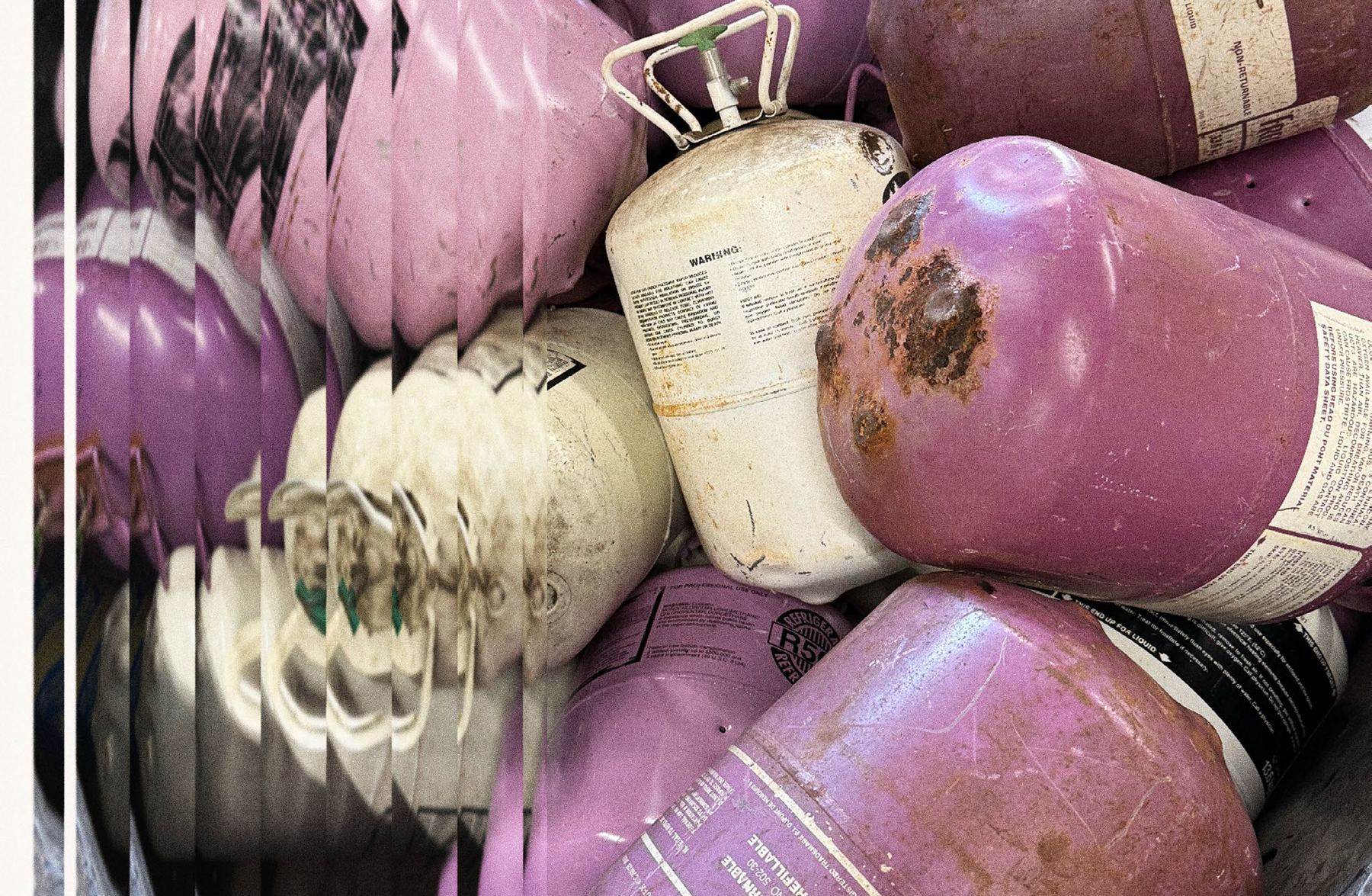

This chapter sets out why superpollutant credits differ from the rest of the voluntary carbon market; how the shorter atmospheric lifetime of these gases changes what companies can credibly claim; where a buyer new to this segment should begin thinking about criteria such as quality, value and scalability; and how these projects may one day pave the way for broader policy or more widespread adoption.
The following mitigation measures meet the criteria described below and in Appendix E. The Carbon Containment Lab believes all are reasonable candidates to be prioritized by buyers today, with caveats and ongoing improvement areas specific to each pathway that are detailed in Appendix F’s case studies:
- Landfill gas capture: Mature, reliable, and impactful, with significant potential to reduce methane emissions from sites where capture remains unregulated, limited by economics, and/or in countries that are transitioning to larger more centralized waste management facilities.
- Anaerobic digesters for agricultural waste: Modular and scalable, with the potential to reduce both methane and nitrous oxide emissions from manure and agricultural residues.
- Lifecycle Refrigerant Management: Builds the infrastructure needed for a circular refrigerant economy while preventing high-GWP gases from entering the atmosphere. Crediting activities for ODS and HFC destruction are well complemented by leak detection and repair and reclamation; as well as updating efficient and low-GWP equipment.
- Rice methane: A large methane-reduction opportunity that could see a renaissance as improved measurement, reporting, and verification can generate high-quality projects whose emissions reductions can be quantified and credited.
- Orphaned oil & gas well plugging: A potentially low-cost, high-impact opportunity to eliminate persistent methane leaks, especially as baseline setting, measurement and verification systems improve with greater investment.
- Industrial nitrous oxide: Major point source emissions offer a concentrated and potentially cost-effective abatement opportunity where emissions are not otherwise regulated.
Why Superpollutant Credits Are Different
The carbon credits most often top of mind are nature-based approaches such as reforestation or engineered carbon dioxide removal (CDR) projects like Direct Air Carbon Capture (DACC). However, credits for superpollutant abatement have existed since the early days of carbon markets, beginning with some of the first methodologies under the Clean Development Mechanism (CDM).148 These credits are not only tested by time and deployment experience, but they also remain significantly cheaper than other categories of credits—and are shown to have higher average quality and integrity than other types.149
Available supply
The VCM has a large, established base of superpollutant credits, and many are available now on the spot market. As of the end of 2025, superpollutants represented the third-largest category of available credits in the carbon market, as measured by issuance.150 From 1996 to 2025, approximately 443 million superpollutant credits were issued. Of those already issued, about 229 million have been retired, and 213 million credits are yet to be retired, meaning they may be available for purchase.151
Figure 9: Sectors that host superpollutant carbon credits by type
Agriculture & Land Use
- Compost Production & Soil Application (Methane)
- Compost Addition to Rangelands (Methane)
- Feed Additives (Methane)
- Manure Digesters (Methane)
- Rice Emission Reductions (Methane)
- Biodigesters (Methane)
- Nitrogen Management (Nitrous Oxide)
Industrial Processes
- N2O Destruction in Adipic Acid Production (Nitrous Oxide)
- N2O Destruction in Nitric Acid Production (Nitrous Oxide)
- HFC Replacement in Foam Production (F-Gases)
- Aluminum Smelters Emission Reductions-PFCs (F-Gases)
Household & Residential Energy
- Cookstoves (Black Carbon)
Fossil Fuel Extraction & Power Generation
- Leak Detection & Repair in Gas Systems (Methane)
- Plugging Oil & Gas Wells (Methane)
- Waste Gas Recovery (Methane)
- Mine Methane Capture & Destruction (Methane)
- Pneumatic Retrofit of Oil & Gas Wells (Methane)
- Natural Gas Electricity Generation (Methane)
Solid Waste & Wastewater Management
- Biodigesters (Methane)
- Composting (Methane)
- Landfill Methane (Methane)
- Methane Recovery in Wastewater (Methane)
- Solid Waste Separation (Methane)
- HFC Refrigerant Reclamation (F-Gases)
- HFC Destruction (F-Gases)
- Ozone-Depleting Substances Recovery & Destruction (F-Gases)
Refrigeration & Air Conditioning
- Advanced Refrigerants (F-Gases)
- Refrigerant Leak Detection (F-Gases)
Superpollutant credits have experienced a notable revival since 2020, with issuances and retirements increasing rapidly in recent years. In 2025 alone, around 61 million superpollutant credits were issued, approximately 80 percent of which came from F-gas and methane projects.152 These trends can be seen in Figure 10.
Underpinning this activity is an expanding set of methodologies, many of which are high quality. The Carbon Containment Lab’s global database tracks more than 400 methodologies across 18 registries. Of this total, 154 directly address superpollutants, and 118 are currently active as of May 2026. Methane has the broadest coverage with 87 active methodologies. In the past year alone, 10 new methodologies came online, and at least four more are being drafted by the Open Carbon Protocol and Isometric.
Figure 10: Superpollutant credits issued in the voluntary carbon market by year
SOURCE: Carbon Containment Lab, 2026
Credits issued by year
From 1996 to 2025, approximately 443 million superpollutant credits were issued.
A revival since 2020
Superpollutant credits have experienced a notable revival since 2020, with issuances and retirements increasing rapidly in recent years.
2025
In 2025 alone, around 61 million superpollutant credits were issued, approximately 80 percent of which came from F-gas and methane projects.
High quality
Superpollutant credits on the VCM are, on average, high-quality, delivering measurable climate benefits and oftentimes important environmental, human health and economic co-benefits as well. As an indicator, Calyx Global, an independent ratings agency with the largest set of superpollutant ratings, found that more than 50 percent of these credits fall into their top integrity tier, rated AAA to A (“Tier 1”), as shown in Figure 11. In contrast, other non-superpollutant credit types, such as forestry and renewable energy, currently account for less than 5 percent in the Tier 1 category. Calyx Global notes that superpollutant projects tend to earn higher ratings due to robust methodologies, strong additionality, highly measurable emission reductions, and a total absence of permanence risk. For example, ODS destruction projects in Calyx’s ratings have a 95 percent AAA–A rating (across 45 projects), and landfill gas has a 33 percent AAA–A rating (across 150 projects).153
Another ratings platform, BeZero, shows similar trends, with superpollutant projects also skewing toward the higher end of ratings compared with CO2 projects. A clear range of quality still exists across individual projects, so due diligence is needed at the project level (see Figure 12).154
Figure 11: Distribution of Calyx Global’s ratings of superpollutant projects compared to non-superpollutant projects (June 1, 2026)
- Calyx-rated superpollutant projects
- Calyx-rated non-superpollutant projects
Figure 12: Distribution of BeZero Carbon’s ratings of superpollutant projects compared to non-superpollutant projects (May 25, 2026)
- BeZero-rated superpollutant projects
- CO2 BeZero ratings
Low prices
Data from ClearBlue Markets shows that across 272 recorded spot-market superpollutant credit transactions from 2021 to 2026, prices vary by vintage year, type, and country, with a median $4.70 per ton (Figure 13).155 Certain credit types can attract high prices: a U.S. composting-to-rangeland project sold credits for $85 per ton in 2025 and a rice methane project sold credits for $43.87 per ton in 2024. Many of the lower-priced credits are generated in emerging market countries or represent older vintages, reflecting the duration of their availability on the market. Prices also vary by transaction volume—larger transactions typically get a discount. Projects that follow methodologies and programs vetted positively by the Integrity Council for the Voluntary Carbon Market (ICVCM) and are labeled as following the Core Carbon Principles are beginning to command a modest premium.
The relatively low prices can create the misleading impression that these credits are poor quality, even though that is far from the case. Until the market reflects the true value of superpollutant credits, companies buying them now can stretch their budgets further.
Figure 13: Average prices for superpollutant credit types by category, 2021–2026
- Waste Gas Recoveryn=7, $2
- Natural Gas Electricity Generationn=9, $3
- Advanced Refrigerantsn=8, $3
- Methane Recovery in Wastewatern=9, $4
- Leak Detection & Repair in Gas Systemsn=11, $4
- HFC Refrigerant Reclamationn=27, $4
- HFC Replacement in Foam Productionn=27, $4
- N2O Destruction in Nitric Acid Productionn=3, $6
- Manure Methane Digestern=21, $6
- Landfill Methanen=78, $6
- Compostingn=19, $6
- N2O Destruction in Adipic Acid Productionn=1, $6
- Biodigestersn=27, $7
- Cookstovesn=56, $8
- Ozone Depleting Substances Recovery & Destructionn=14, $11
- Plugging Oil & Gas Wellsn=4, $20
- Mine Methane Capture (ACR Only)n=5, $30
- Rice Emission Reductionsn=1, $44
- Compost Addition to Rangelandsn=1, $85
NOTE: Data retrieved from the Vantage carbon intelligence platform, provided by ClearBlue Markets (Aug. 10, 2026), clearbluemarkets.com.
Where to Start: A Ladder, Not a Menu
For a company beginning or expanding its superpollutant strategy, carbon credits are best understood as a sequence rather than a set of equivalent options. Each step up the ladder increases the risk a buyer takes on, the level of due diligence required, and control over how the credits are generated.
Start here: Buying spot
Buyers typically purchase already-issued (“ex-post” or “spot”) credits from registries, trading platforms, and brokers, or directly from project developers. These credits represent climate benefits that have already been delivered by a project’s actions and have been fully validated and verified by third-party certification bodies. Credits are issued by registries that write the methodologies and ensure that certifiers are properly accredited to international and national standards. Project information and certification reports can be found on registries, ratings, and retail platforms.
Buying spot minimizes delivery risk because the credits are already issued and enables the buyer to retire them immediately against climate commitments or to hold them as assets. Purchasing spot credits is the most straightforward entry point into superpollutant credits, and companies need only the simple capability to purchase and retire credits (for companies new to this, see page 70 for additional resources). However, buying spot credits does not come with a guarantee of future price levels or long-term supply; and the environmental attribute being transferred may relate to abatement that occurred several years earlier.
For a company beginning or expanding its superpollutant strategy, carbon credits are best understood as a sequence rather than a set of equivalent options.
Next: Buying forward and investing directly
Buying forward means entering into contracts to purchase credits that will be generated by a project in the future, typically spanning several years and governed by an offtake agreement. Such agreements secure long-term supply for buyers and provide price certainty through fixed or formula-based pricing. Projects vary in their level of maturity—and by extension their risk of nondelivery: some are fully validated and have already issued several vintages, while others are still working on documentation and starting operations. This purchasing strategy introduces more delivery risk and contractual complexity, which often requires extensive and costly due diligence to manage. However, buyers who are able to take this approach will be at the forefront of superpollutant mitigation directly supporting the generation of new climate benefits.
Investing directly in a project, especially when paired with a future offtake agreement, can help provide catalytic capital that supports project scale-up, which is often a significant hurdle for early-stage projects. Investing directly also gives the buyer deeper influence over project design and governance but is the highest-risk undertaking. It requires a strong understanding of carbon markets and significant resources to engage in robust due diligence prior to making an investment decision.
Expanding the strategy: Portfolios and ecosystem support
Most buyers will purchase spot credits, especially lower-volume purchasers. Larger, sophisticated buyers can blend all three strategies, using spot purchases to cover near-term claims and offtakes and/or long-term investing to anchor strategic, high-quality projects over the medium to long term. Buyers can also mix superpollutant and CO2-based credits into one portfolio, which diversifies risk across categories and supports a wider range of co-benefits and local impact. Several intermediary companies in the market already provide high-quality portfolio-style options to buyers, which considerably lowers the capability threshold for buyers.
Finally, with or without buying credits directly, companies can act as strategic partners to project developers by providing host sites, advice, connections, technologies, R&D, referrals, and shared due diligence with other companies and investors. Companies can also catalyze wider superpollutant mitigation by sharing their experiences, publishing best practices, and demonstrating real-world outcomes. This leadership builds market traction and generates interest from a broader circle of companies and investors while legitimizing these climate actions by showcasing verified results.
Selection: What to Look for in Superpollutant Credits
With so many varieties of superpollutant credits available, choosing which credits to include in purchases can be daunting. Numerous criteria can be applied to the selection process, and many of these would apply to any carbon credit type. Issues such as quality, additionality, durability, and leakage cut across all categories. Buyers should weigh their own risk appetite, budget, and available contracting mechanisms; their preferences on location, industry, marketability, and co-benefits; and their timing and capacity for due diligence and review.
What differs for superpollutants is the purpose of the screen. Here, the goal is to select project types that can help scale deployment over the next five years and contribute to near-term climate stabilization. A five-year lens favors projects where credits do more than pay for abatement: they build supply, absorb early risk, and create momentum for broader adoption and/or regulation. It also implies some tolerance for project types that are still maturing, provided the path to volume is visible and the barriers to scale are surmountable.

The Carbon Containment Lab proposes the following four categories of selection criteria for superpollutant credits which are also further detailed in Appendix E:
- Scalable. The project type has the technical and market potential for widespread application, replication, future cost reduction, and, therefore, impact on warming. The constraint for superpollutants is not generally whether abatement is technically possible, but whether the same intervention can be delivered multiple times. Five key factors drive scalability: 1) the size and accessibility of the source of emission in aggregate; 2) the technical and methodological readiness of the mitigation measure; 3) repeatability across geographies and asset classes; 4) the absence of binding input, supplier, or workforce constraints; and 5) the ability to absorb capital in a way that unlocks a larger pipeline. Given the potency of superpollutant gases, even small and dispersed sources are worth accessing, provided a collection and verification pathway exists.
- Value. The project has strong unit economics and a credible path to economies of scale. Credits with higher value have a cost structure that is understood, defensible, and likely to improve with volume. Co-product revenues can add economic resilience, provided they do not raise concerns about financial additionality or risk double counting of the environmental attributes. Price and cost transparency matter, and verification and diligence costs should be reasonable both absolutely and as a share of credit value.
- Quality. This category overlaps substantially with common carbon market criteria, and superpollutant credits tend to score comparatively well because the abatement is typically a discrete, measurable, and physically irreversible event. Five aspects warrant particular attention: 1) additionality, which carries unusual weight where compliance obligations vary by jurisdiction and change quickly; 2) net climate benefit assessed across the full life cycle, including trade-offs between gases; 3) timing of impact, since superpollutants share potency but range in atmospheric lifetime, and some methodologies issue credits up front for avoided emissions long in the future; 4) safeguards against perverse incentives, which are a structural risk in a class of gases where the same actors often control both production and abatement; and 5) the potential to deliver co-benefits, which functions as an integrity and maturity signal as much as a marketing one.
- A path to policy. The project ideally builds capacity for future regulation. Superpollutants include some of the most heavily regulated classes of greenhouse gas, and voluntary carbon finance is transitional toward broader policy. Carbon finance can provide the funding to support innovation, evolve technologies, improve MRV systems, and reduce costs for new approaches. Policymakers can then point to these advances to justify regulations that scale action and impact.156 For existing, mature technologies, carbon finance can also help to finance the infrastructure, data, and institutional capacity that regulation needs to function in the window before mandates arrive or in jurisdictions where they have not yet been written. Projects developed with this path to policy in mind should also have a crediting period scoped to expected policy timelines or with cutoffs sensitive to new regulations.
Making Climate Impact Claims with Superpollutant Credits
Companies should also consider their strategy for using credits in climate impact claims, especially given the considerations discussed in Chapter 4: Value Chain. Companies can use credits to offset emissions to reach net zero or make a “contribution claim” (see guidance from SBTi and VCMI, listed in Box “For companies new to carbon credits” on page 70).
Since many superpollutants have a strong—but shorter-lived—effect on the atmosphere compared with carbon dioxide, the effect of avoided warming from one superpollutant credit is felt for a shorter time than the warming impact of the metric ton of CO2 emitted that it may be used to offset. Rather than treating this as a limitation, forward-thinking portfolio approaches use it as a structural feature.
Strategies include stacking credits either horizontally or vertically to neutralize not just net emissions but also their total warming impact over time. By vertically stacking credits, a buyer purchases multiple shorter-duration credits up front. By horizontally stacking credits, buyers replace each short-lived credit with another credit when its impact on warming ends.157 Companies can secure these credits through forward purchase agreements or by establishing an escrow-type account to ensure that funds are available to purchase future credits. Google is a leading example of this approach, proposing a common metric of sustained warming neutralization that translates the climate impact of both shorter- and longer-lived emissions into a single metric.158
Temperature impact-based approaches, metrics and portfolios are still emerging and being tested. However, in the near term they can help to address durability or volatility concerns, mitigate risks through diversification, and address concerns of taking short-lived mitigation actions against long-lived emission liabilities. Regardless of the structure, when used well, superpollutant credits can absorb near-term volume and cost pressure and reduce the burden on CDR and nature-based VCM projects to meet climate goals in a period when those project types are still scaling.
Buyer Call to Action
Fully utilizing the VCM means both purchasing more available superpollutant credits today via the spot market and—if there is capacity—buying forward and investing to help build tomorrow’s supply. In both cases, the selection criteria outlined above should guide buyers on which credits and projects to prioritize. Credits that meet these criteria are more likely to deliver the outcomes superpollutant mitigation is best positioned to offer: genuine, near-term reductions in warming impact. A portfolio approach is more defensible than attempting to optimize for any single criterion.
Companies can also act as project hosts, contribute to R&D, innovate on MRV systems, and share their experiences and best practices to help build the field.
Carbon markets are best understood as a bridge and a financing mechanism rather than an end state. The trajectory of renewable energy is instructive: carbon finance helped attract early capital, build infrastructure, and bring down costs to the point where renewables now largely compete on their own economics, without needing carbon markets to remain viable. Superpollutant mitigation can follow a similar path. Sustained buyer engagement today, through both spot and forward purchasing, can accelerate the point at which refrigerant recovery, methane capture, and nitrous oxide abatement become standard practice: supported by policy, embedded in ordinary business operations, and no longer reliant on carbon credit markets to justify their economics.
Checklist 2: Voluntary carbon market checklist for companies
Next 12–24 months period:
- Review the superpollutant mitigation measures reachable through carbon markets today—see Appendix B on Mitigation Measures.
- Confirm how carbon credits can be used toward your company’s climate targets and claims, such as toward a net-zero target or a contribution claim, and in relation to key standards.
- Screen candidate projects against criteria at the project level (using ratings rather than the category average).
- Make a spot purchase of a recommended superpollutant credit type directly, or via a broker, platform, or aggregator.
- Open a conversation with at least one project developer about a forward offtake.
- Act as a strategic partner to project developers by offering host sites, technical input, research and development support, referrals, and shared due diligence.
- Publish results and lessons learned, since demonstrated outcomes attract the next tranche of buyers.
By 2030:
- Review holdings against rules and policies arriving through 2030, which will erode the additionality of credits.
- Build a portfolio that blends spot, forward, and direct investment across superpollutant and CO2 pathways.
- Move a defined share of credit purchasing into multi-year forward agreements or direct project investment, accepting greater delivery risk in exchange for bringing new mitigation online.
- Determine whether the shorter atmospheric lifetime of superpollutants is material to the intended claim, and if so, whether vertical or horizontal stacking is the appropriate response. Potentially establish a ring-fenced or escrow-type fund where horizontal stacking is part of the approach, so that successive purchases are financed rather than merely intended.
- Support methodology development for pathways the market does not yet serve well.
- Act as a strategic partner to developers by offering host sites, technical input, research and development support, referrals, and shared due diligence.
- Publish results and lessons learned, since demonstrated outcomes attract the next tranche of buyers.
Endnotes
Numbering follows the report, so the web and print editions cite alike.
- “CDM Methodologies,” United Nations Framework Convention on Climate Change, accessed August 11, 2026, https://cdm.unfccc.int/methodologies/index.html. ↩
- The Carbon Containment Lab and Calyx Global, “Superpollutants: Tackling a Major Climate Threat,” October 2, 2025, https://calyxglobal.com/research-hub/research/super-pollutant-carbon-credits-paper/. ↩
- Ibid. ↩
- Carbon Containment Lab analysis of Pamela Quartson et al., Voluntary Registry Offsets Database, version 2026-06 (Berkeley Carbon Trading Project, University of California, Berkeley, 2026), gspp.berkeley.edu/berkeley-carbon-trading-project/offsets-database. ↩
- Ibid. ↩
- Calyx Global, superpollutant and non-superpollutant project ratings spreadsheet (received by author, June 1, 2026). ↩
- BeZero, superpollutant carbon ratings spreadsheet (unpublished dataset, received by author, May 25, 2026). ↩
- ClearBlue Markets. Vantage, carbon intelligence platform, 10 Aug. 2026, clearbluemarkets.com ↩
- “AIM Platform Standard and Guidance,” AIM Platform, accessed August 11, 2026, https://aimplatform.org/standard-development/aim-platform-standard-and-guidance/. ↩
- Carbon Direct, Integrating Superpollutant Mitigation into Corporate Climate Action (Carbon Direct, 2026), https://www.carbon-direct.com/research-and-reports/integrating-superpollutant-mitigation-into-corporate-climate-action. ↩
- Ella Hughes et al., “Sustained Neutralization of the Warming Response to Emissions through a Portfolio of GHG Mitigation Strategies,” preprint, submitted May 13, 2026, CDRXIV, https://cdrxiv.org/preprint/521. ↩